How to taste honey like a beekeeper
Room temperature, a clean spoon and a little patience — a beekeeper’s ritual for meeting a honey properly, and why crystals are nothing to fear.
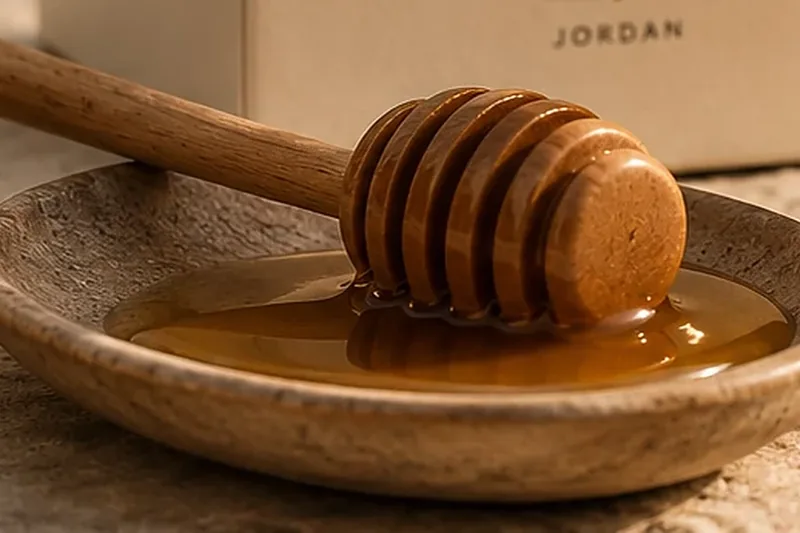
Most honey is eaten in a hurry: a spoonful stirred into tea, a drizzle over breakfast, gone before anyone has noticed what it tasted like. Beekeepers taste differently. They taste the way a coffee taster meets a new crop — slowly, with attention, looking for the place and the season in every spoon. You do not need a hive to taste like this. You need a jar, a clean spoon and five quiet minutes.
Begin at room temperature
Cold dulls flavour. Honey from the fridge is stiff and shy; its aromas stay locked inside. Keep your jar in a cupboard, away from the stove and the sun, and taste it at room temperature — around twenty degrees is ideal. If you are tasting more than one honey, set them out side by side half an hour before you begin.
Use a clean, dry spoon — wood, porcelain or glass if you have them, steel if you don’t — and keep a glass of plain water nearby to rinse your palate between tastes.
Look first
Before you taste, look. Hold the spoon up to the light. Is the honey pale gold, amber, copper, almost brown? Darker honeys tend to be deeper and more mineral in flavour; paler ones are often lighter and more floral. Tilt the spoon and watch how it moves: some honeys run like water, others fall in a thick ribbon that folds over itself. Our Sidr falls slowly and catches the light like old glass.
Smell, then wait
Bring the spoon close and breathe in gently, the way you would over a cup of coffee. You might find warm caramel, dried fruit, flowers, hay, wood, or something green and herbal. Don’t search too hard — the first impression is usually the truest.
Then place a little on your tongue, and wait. Don’t swallow straight away. Let the honey melt and spread, and notice how the flavour changes: the sweetness arrives first, then the character of the honey, and finally the finish — the taste that lingers once it has gone. With Sidr, the caramel comes first, the dates follow, and a gentle woodiness stays long after.
Taste the first spoon with your eyes closed. The second, you can share.
Crystals are natural
Sooner or later, a jar of raw honey will begin to turn cloudy and firm. This is crystallisation, and it is completely natural — a sign that the honey has not been heated or filtered to stay artificially clear. Every honey crystallises at its own pace, depending on its flowers and the temperature of the room.
Crystallised honey is still the same honey. Many beekeepers prefer it: spread on warm bread, it melts into a soft, creamy layer. If you would rather have it flowing again, stand the closed jar in a bowl of warm — not hot — water and stir gently now and then. Never use the microwave, and never boil it; strong heat dulls the delicate aromas that make each harvest itself.
Keep it well
Honey keeps beautifully if you let it. Close the lid tightly after each use, always reach for a dry spoon, and store the jar somewhere cool, dry and dark. There is no need for the fridge. Treated this way, a jar still tastes of its season long after the season has ended.
The beekeeper’s breakfast
Ask a beekeeper how they eat honey on an ordinary day and the answer is rarely complicated: warm bread, a little labneh or butter, a spoonful of honey and a glass of tea. Simple things, chosen well and eaten slowly. That is the whole ritual — and the best way to taste a season.