Why Sidr — the tree of patience
A thorny, unhurried tree that flowers in the lowest valley on earth. Why our first harvest had to come from the sidr.
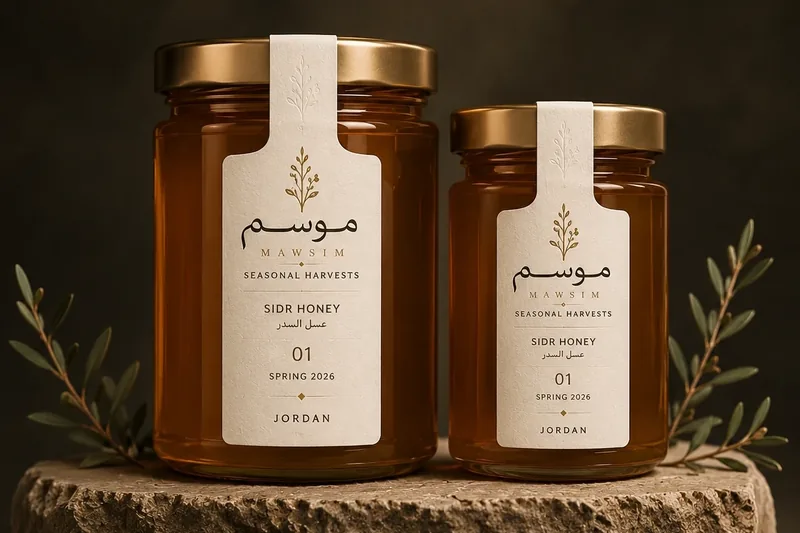
There is a tree in the Jordan Valley that seems to ask for nothing. It grows from cracked earth beside dry riverbeds and along the edges of fields, its branches low and thorny, its leaves small and glossy against the heat. Farmers leave it standing when they clear the land. Shepherds rest beneath it at noon. Our grandparents simply called it sidr, and nobody needed to explain why it mattered.
A tree that waits
The sidr — Ziziphus spina-christi to botanists — is a tree of patience. Its roots go deeper than almost anything else in the valley, searching out water the surface forgot long ago. It survives summers above forty degrees and winters that bring a week of rain, or none at all. It grows slowly, lives for generations, and keeps its leaves when other trees give up.
That patience is what drew us to it. A seasonal honey house is, in the end, a promise to wait: for the right bloom, for the colonies to grow strong, for the frames to fill and be capped in their own time. The sidr waits better than any of us.
When the valley flowers
In the Jordan Valley, spring comes early. By March, while the hills around Amman are still cold at night, the valley floor is already warm, and the sidr opens its flowers — tiny, five-pointed, green-gold, and so modest that you could walk past a tree in full bloom without noticing. The bees notice. From first light they move through the branches in a low, steady hum, and the air around the trees smells faintly of warm sugar.
Our beekeepers bring the hives down into the valley at the start of the bloom and leave them among the sidr through April and into May. Nothing is hurried. When the frames are full and capped, they are lifted by hand, a few at a time, in the cool hours of the morning.
The sidr does not hurry, and so neither do we. Every jar of Harvest 01 is a spring spent waiting.
What patience tastes like
Sidr honey is unmistakable once you know it. It is deep amber, almost copper against the light, and it leaves the spoon slowly, in a thick, unbroken ribbon. The first taste is warm caramel; then something like dried dates, rich and a little earthy; and finally a gentle, woody finish that stays long after the sweetness has gone.
Because we leave it raw — extracted gently, strained once, never heated or blended — every jar tastes of the particular valley and the particular spring it came from. Next year’s Sidr will be different. That is the point.
Why it had to be first
When we began MAWSIM, we knew our first harvest had to say who we are. We could have started with something easier or more familiar. Instead we chose the tree our families have always lived beside — the one that asks for little, gives generously and teaches you to wait.
That is also why a sidr branch became our mark. The sidr branch symbolises authenticity, nature and blessings. Every season carries a story that begins with the land — and ours begins here, beneath a thorny, patient tree, in the lowest valley on earth, at the very start of spring.